


The World Wide Web Consortium (W3C) has published a new Working Draft of the Decentralized Identifiers (DIDs) v1.1 specification, representing an important milestone in the evolution of self-sovereign identity (SSI). As digital interactions increasingly span multiple platforms, jurisdictions, and trust frameworks, identity systems must move beyond centralized silos. DIDs are designed precisely for this challenge: they provide a standardized way to identify entities, people, organizations, devices, or services, without relying on a single authority or identity provider.
At their core, DIDs are globally unique identifiers expressed as URIs and controlled directly by the subject they identify. Unlike traditional identifiers issued and managed by centralized registries, a DID can be created and managed independently, with cryptographic keys proving control rather than institutional endorsement. The DID itself resolves to a DID document, which contains public keys, verification methods, and service endpoints. This architecture enables secure authentication, encrypted communication, and verifiable credential exchange without exposing unnecessary personal data or creating centralized points of failure.
The transition from DID v1.0 to v1.1 is not a conceptual rewrite, but a critical refinement aimed at strengthening interoperability and implementation consistency. One of the main challenges in decentralized identity ecosystems has been fragmentation: different DID methods, ledgers, and resolution approaches often work well in isolation but poorly together. The v1.1 Working Draft clarifies ambiguities in the data model and resolution process, helping ensure that a DID created in one ecosystem can be reliably resolved and verified in another. For real-world deployments, this interoperability is essential if SSI is to scale beyond pilots and niche use cases.
From a technical perspective, DID v1.1 improves the definition of the DID document structure and the semantics of its properties. The specification places stronger emphasis on consistent representation of verification methods, authentication relationships, and key material. This matters because wallets, agents, and identity hubs must interpret these documents in the same way to avoid trust mismatches or security risks. By tightening these definitions, the new draft reduces the likelihood of incompatible interpretations across different implementations.
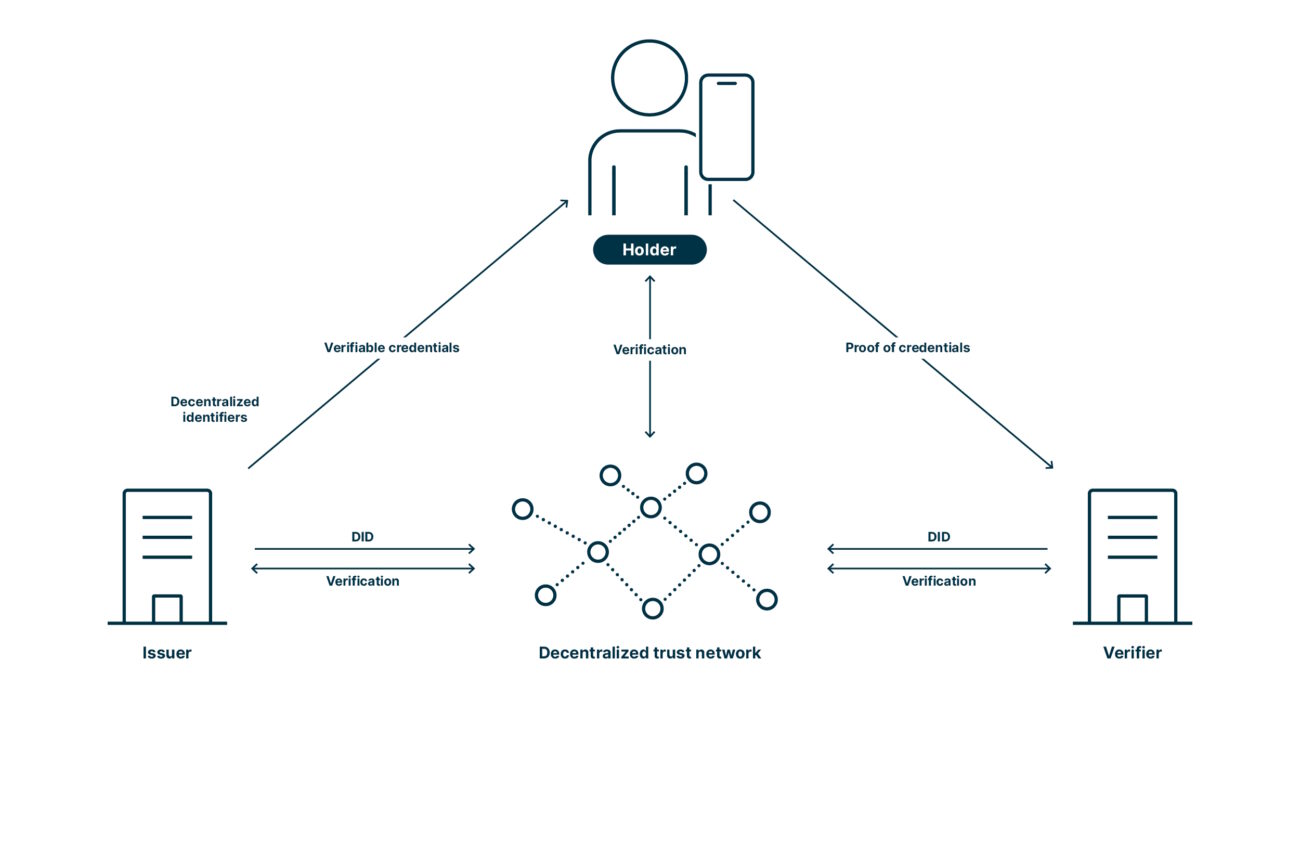
For wallet developers and SSI solution builders, DID v1.1 provides clearer guidance on lifecycle operations such as creation, update, rotation, and deactivation of identifiers. These operations are fundamental for maintaining long-term security, especially in environments where cryptographic keys may need to be rotated or compromised identifiers revoked. The specification also reinforces best practices around minimizing correlation and supporting privacy-preserving interactions, which are core principles of self-sovereign identity.
On the other side of the ecosystem, verifiers and service providers benefit from a more predictable and standardized resolution process. DID resolution is the mechanism by which a verifier retrieves a DID document to validate signatures or credentials. Inconsistent resolution behavior across methods has historically increased integration complexity. DID v1.1 addresses this by better aligning resolution outputs and error handling, making it easier for services to trust credentials issued by wallets and issuers operating on different networks or infrastructures.
The relevance of DID v1.1 extends well beyond the SSI community itself. Governments, enterprises, and infrastructure providers are increasingly exploring decentralized identity for use cases such as digital wallets, cross-border identity verification, supply chain traceability, and Internet of Things (IoT) security. Open, vendor-neutral standards are a prerequisite for these systems to interoperate at scale and avoid lock-in. By refining the DID specification, the W3C is strengthening the technical foundation on which these broader identity frameworks can be built.
It is also important to note that DID v1.1 remains a Working Draft. This status signals openness to feedback from implementers and stakeholders, and it reflects the W3C’s iterative approach to standardization. For organizations building or planning SSI solutions, now is a strategic moment to align architectures with the updated draft, participate in discussions, and ensure that practical deployment experience informs the final recommendation.