

In an increasingly digital world, identity has become a critical infrastructure that shapes access to services, rights, and opportunities. Yet most digital identity systems today are built around centralized control, data extraction, and limited user autonomy. Self-Sovereign Identity (SSI) emerges as a response to these limitations, proposing a new way to design digital identity systems that are more secure, privacy-preserving, and centered on individual control
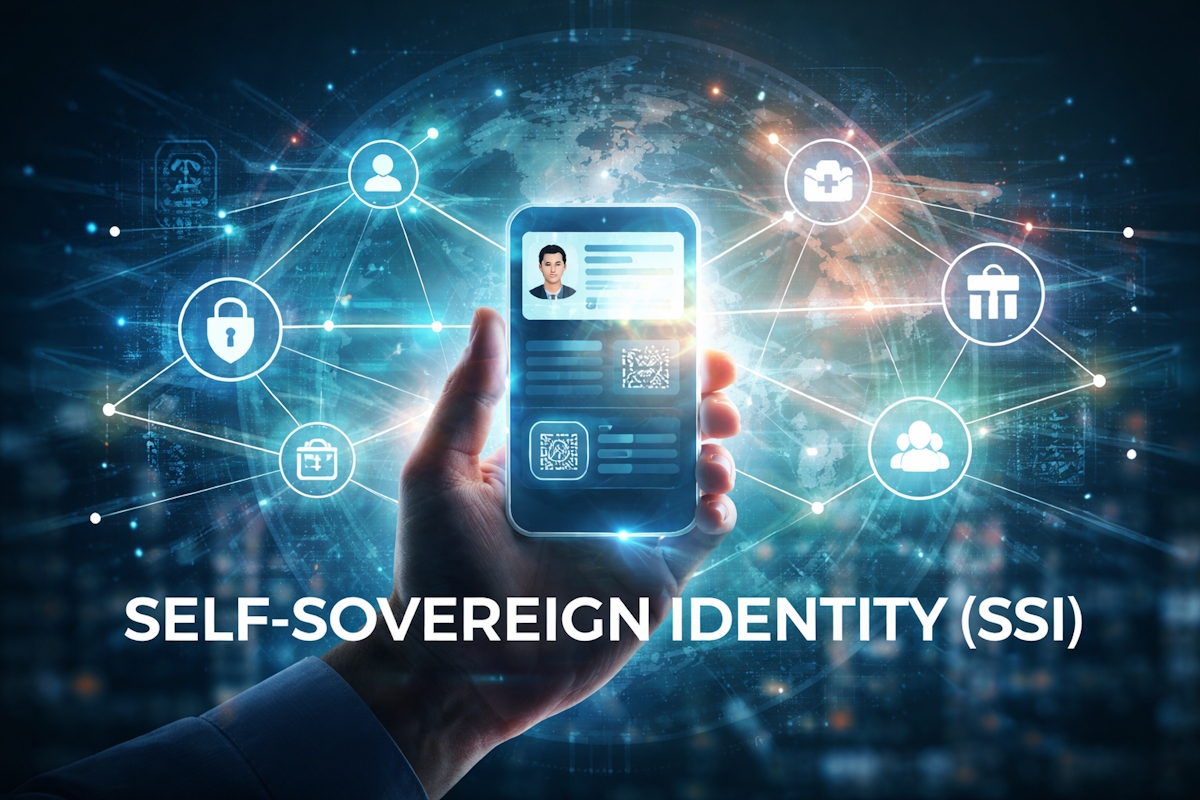
Self-Sovereign Identity, commonly referred to as SSI, is a new paradigm for managing digital identity that fundamentally changes how individuals, organizations, and systems interact in the digital world. At its core, SSI is based on a simple but powerful idea: people and entities should have full control over their own identity data, rather than relying on centralized platforms, governments, or corporations to manage, store, and validate who they are. Unlike traditional digital identity systems, where identity is issued, stored, and controlled by third parties, SSI places the individual at the center of the identity ecosystem.
To understand why SSI matters, it is first necessary to consider how digital identity works today. Most existing systems are centralized or federated. Users create accounts on platforms, governments issue digital IDs, and service providers store personal data in large databases. This model has enabled massive digital growth, but it has also created structural problems: large-scale data breaches, identity theft, excessive data collection, surveillance practices, and strong dependency on a small number of intermediaries. In these systems, individuals do not truly “own” their digital identity. Instead, they depend on external actors to confirm who they are, often repeatedly and inefficiently.
SSI proposes a fundamentally different approach. In an SSI model, identity is not an account, nor is it a record stored in a central database. Instead, identity is composed of verifiable digital credentials issued by trusted institutions and held directly by the individual in a secure digital wallet. These credentials can represent personal attributes, qualifications, rights, or roles. Importantly, they are cryptographically signed, which means their authenticity can be verified without needing to contact the issuer each time they are used.
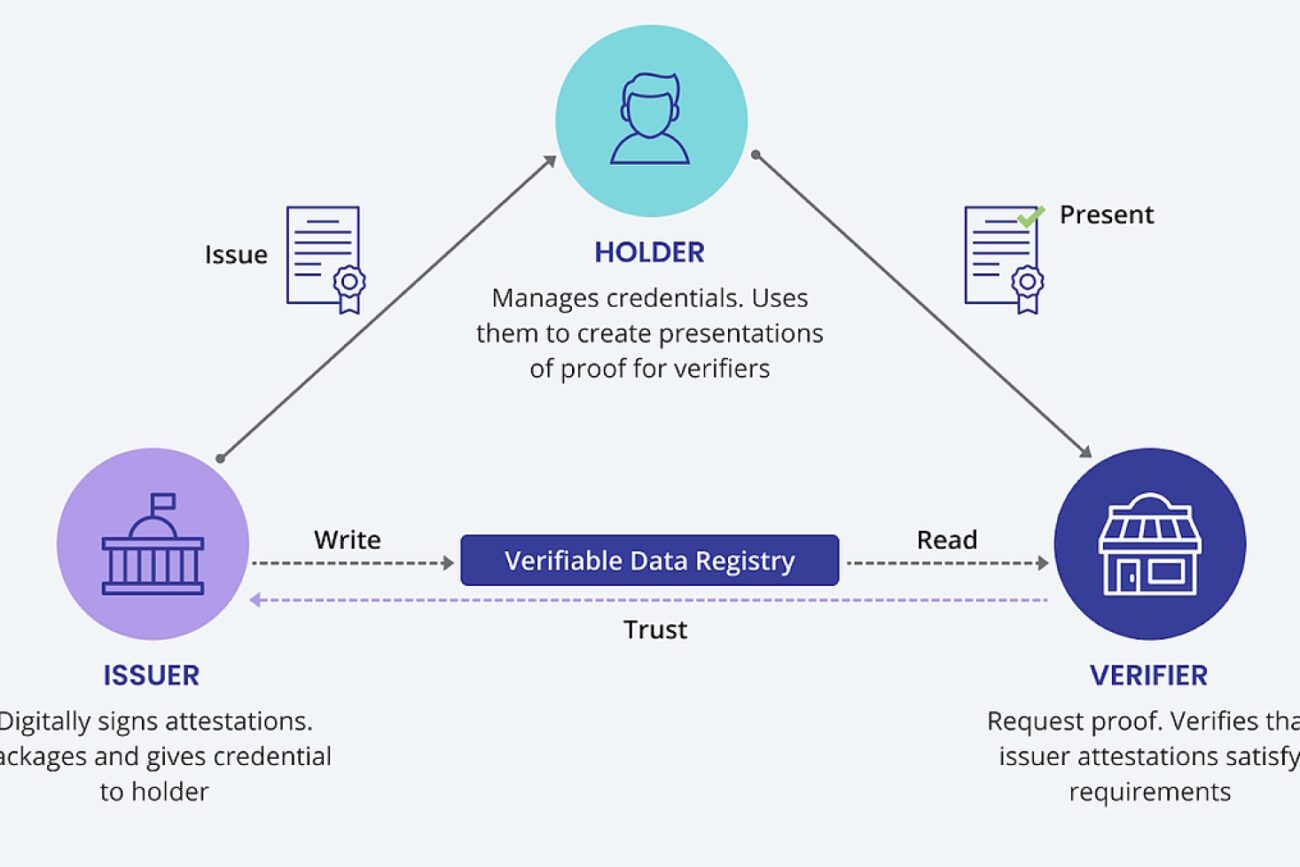
A practical example helps clarify this concept. Imagine a university graduate applying for a job. In a traditional system, the candidate might upload scanned diplomas, transcripts, or certificates, which the employer may then need to manually verify by contacting the university or trusting uploaded documents. This process is slow, repetitive, and prone to fraud. In an SSI-based system, the university issues a verifiable credential attesting to the degree awarded. The graduate stores this credential in their digital wallet and, when applying for a job, can present it instantly. The employer can verify its authenticity cryptographically, without accessing the university’s database or storing unnecessary personal data. The individual remains in control throughout the process.
Another common example involves age verification. Many online services require users to prove that they are over a certain age, yet they often ask for full identity documents or dates of birth. With SSI, a trusted authority can issue a credential stating that a person is over a specific age threshold. When accessing a service, the user can prove this single fact without revealing their name, exact birth date, or any additional personal information. This illustrates one of SSI’s most important advantages: selective disclosure, where only the minimum necessary information is shared.
This separation between identity data and identity verification is central to SSI. Traditional systems rely on copying and storing personal data, increasing exposure and risk. SSI enables verification without replication, reducing data accumulation and improving privacy by design. Service providers no longer need to store large volumes of sensitive data, which also lowers their compliance and security burdens.
Decentralization is another defining characteristic of SSI. While institutions continue to play an important role as credential issuers, they are no longer permanent intermediaries in every interaction. Verification does not require continuous connectivity to a central authority, nor does it generate a trail of identity usage that can be monitored or exploited. This reduces systemic vulnerabilities and creates more resilient identity infrastructures.
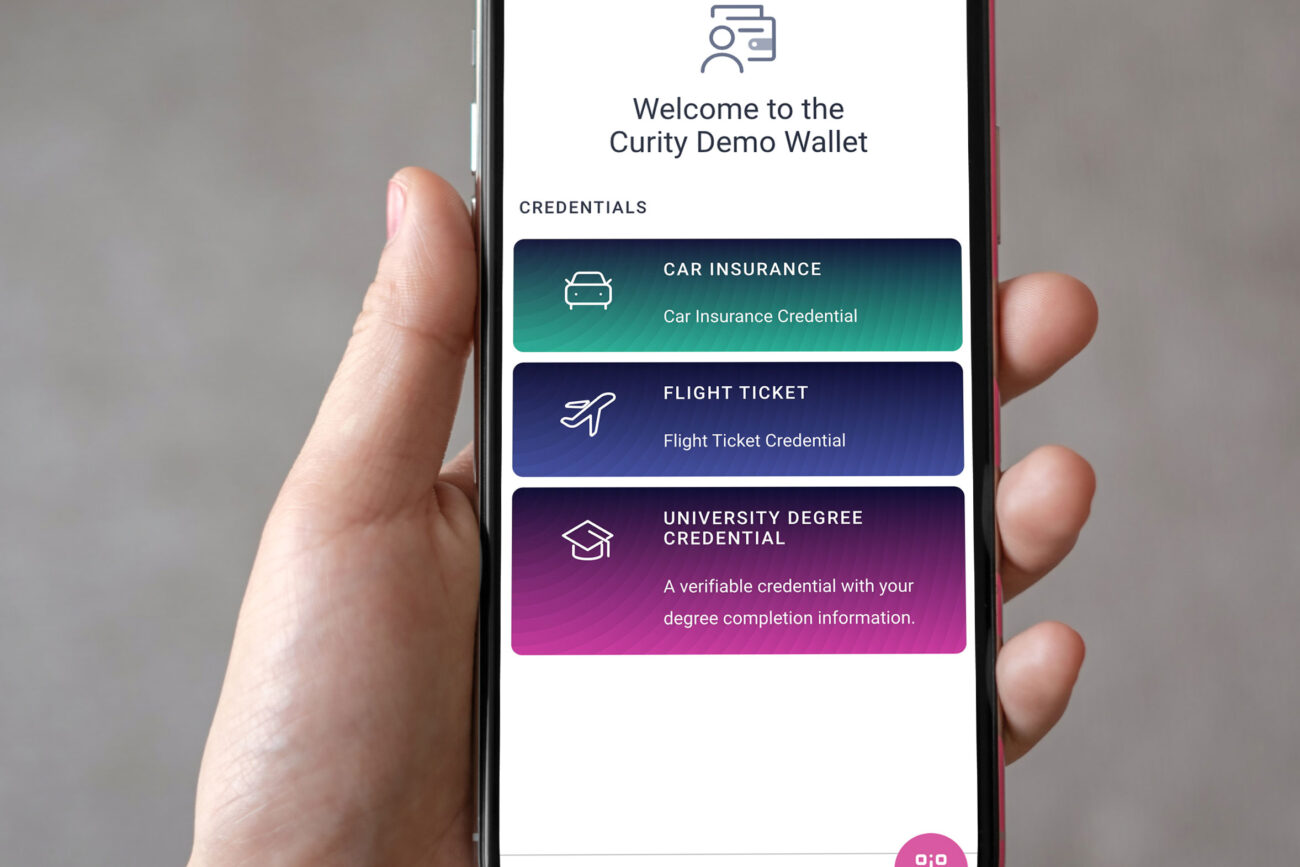
SSI is also closely connected to the concept of digital sovereignty. In this context, sovereignty means the ability of individuals and organizations to manage their digital presence independently, within shared legal and technical frameworks. SSI supports this by relying on open standards and interoperable protocols, allowing identities to function across platforms, sectors, and borders without fragmentation. An identity credential issued in one context can be reused in another, eliminating the need for repeated onboarding processes.
Beyond technology, SSI represents a broader socio-technical shift. Digital identity is increasingly tied to access to services, employment, education, healthcare, and civic participation. How identity systems are designed has direct consequences for inclusion, equality, and trust in digital societies. SSI offers a model that aligns digital identity with values such as autonomy, proportionality, transparency, and accountability, while still supporting security, regulation, and institutional trust.
In summary, Self-Sovereign Identity redefines digital identity as something held and controlled by the individual, supported by cryptography and open standards rather than centralized databases. Through practical mechanisms such as verifiable credentials and selective disclosure, SSI enables safer, more efficient, and more respectful digital interactions. For those new to the topic, SSI can be understood not only as a technological innovation, but as a foundational rethinking of how identity should function in an increasingly digital world.