

Digital identity has become a foundational component of the modern digital ecosystem. It underpins online interactions, commercial transactions, administrative procedures, access to services, and the protection of personal and organisational data. Beyond simple identification, digital identity encompasses the full lifecycle of identity data, including its creation, management, verification, exchange, and protection. As societies, economies, and public administrations become increasingly digitised, digital identity plays a central role in enabling trust, security, interoperability, and compliance across digital environments.

Identity can be defined as a structured set of attributes that uniquely represents a person, an organisation, or an object. These attributes may include civil information such as name and date of birth, contact details, legal identifiers, professional or organisational references, and sector-specific identifiers such as business registration numbers or product identification codes. In the physical world, identity is traditionally established and verified through official documents issued by recognised authorities.
In the digital sphere, this identity is transposed and extended. Digital identity emerges through two complementary mechanisms. On the one hand, it is formed directly through identifiers and attributes that individuals or organisations voluntarily share with digital services in order to access platforms, applications, or transactions. On the other hand, it is constructed indirectly through the aggregation and correlation of usage traces, behavioural data, and interaction logs generated during online activity. Together, these elements form a digital representation that can be persistent, dynamic, and context-dependent.
Several perspectives contribute to a comprehensive understanding of digital identity. One approach focuses on digital footprints and traces left online, including data derived from search queries, online purchases, browsing behaviour, and interactions on social networks. When aggregated and analysed, these data points make it possible to infer identity, habits, preferences, and behavioural patterns. In the European context, the collection and use of such data are regulated by frameworks such as the ePrivacy directive, which complements broader data protection legislation.
Another approach is the sovereign or state-based perspective, which centres on the issuance of certified digital identity documents by public authorities. These include digital identity cards, driving licences, vehicle registration certificates, business registry extracts, and other official credentials. Such documents serve as trusted references for establishing and verifying identity in both public and private sector interactions, and they often form the backbone of national digital identity systems.
A third dimension relates to identity data managed by service providers. Each service with which an individual or organisation interacts tends to create and maintain its own identity profile, consisting of identifiers and personal or organisational data. This information is frequently duplicated across multiple platforms, leading to fragmentation, redundancy, and limited user visibility. In many cases, the reuse or monetisation of this data beyond the original service context lacks transparency. Within the European Union, these practices are governed by the General Data Protection Regulation and reinforced by newer legislative initiatives such as the Data Act, which impose obligations of transparency, purpose limitation, and user rights over personal data.
Across all these dimensions, regulatory compliance and transparency are essential for establishing trust. Organisations are required to clearly communicate how identity data is collected, processed, stored, and shared, and to ensure that appropriate security and governance mechanisms are in place.
Digital identity management models
Digital identity management relies on architectural models that determine how identities are created, stored, authenticated, and shared. Three main approaches are commonly distinguished: centralised, federated, and decentralised identity management. Each model reflects different trade-offs between control, security, scalability, and user experience.
In a centralised identity management model, a single organisation or authority is responsible for collecting, storing, and managing identity data for its users. All authentication and authorisation processes are handled within this central system. This approach simplifies administration, enables consistent policy enforcement, and often reduces integration and maintenance costs. However, it also introduces significant risks. The concentration of identity data in a single repository creates a single point of failure, making the system an attractive target for cyberattacks and increasing the potential impact of data breaches. From a user perspective, centralised models often result in limited control over personal data and the proliferation of separate credentials across different services.
Federated identity management builds on the concept of shared trust between multiple systems. Through mechanisms such as single sign-on and identity federation, users can authenticate once and gain access to multiple services using the same credentials. Authentication responsibility is delegated to a trusted identity provider, either within an organisation or across organisational boundaries through established trust frameworks. This model improves usability by reducing credential fatigue and can enhance security by centralising authentication controls. At the same time, it introduces dependencies on identity providers and creates systemic risks, since a compromise of the federated identity provider can expose a wide range of connected services. Federated models may also encourage broader data aggregation by identity providers, raising additional governance and privacy considerations.
Decentralised identity management, often referred to as self-sovereign identity, represents a fundamentally different paradigm. In this model, individuals and organisations retain direct control over their identity data, which is stored and managed independently of central authorities or service providers. Identity attributes are shared selectively and on a need-to-know basis, typically using cryptographically verifiable credentials. Authentication and verification rely on distributed trust mechanisms rather than central databases. This approach enhances privacy, reduces the risk of large-scale data breaches, and empowers users to manage their digital identity across contexts. However, decentralised identity requires advanced technical infrastructure, new governance models, and broad ecosystem adoption to reach maturity.
Choosing the appropriate identity management model, or a combination of models, depends on organisational objectives, regulatory requirements, risk tolerance, and user expectations.
Comparative analysis of identity management approaches
Centralised identity systems offer operational simplicity, streamlined compliance management, and efficient integration with existing enterprise systems. They enable rapid access to identity data and allow security updates to be deployed consistently. Their main limitations lie in their vulnerability to large-scale breaches, their reliance on strong authentication mechanisms to mitigate risk, and their limited user-centricity.
Federated identity systems significantly improve user experience by reducing the number of credentials required and simplifying access to multiple services. They can lower customer acquisition costs in digital environments and support scalable ecosystems of trusted partners. At the same time, they create structural dependencies on identity providers and concentrate risk at key authentication points. The expansion of data collection across federated services can also increase privacy and compliance challenges.
Decentralised identity systems place control firmly in the hands of users, reducing the likelihood of identity theft and fraud while increasing transparency and data integrity. They support privacy-preserving interactions and enable new digital use cases aligned with evolving European regulatory frameworks, including the European Digital Identity Wallet. Their main constraints are technological complexity, the need for interoperable standards, and the challenge of establishing trust frameworks and adoption at scale.
Focus on decentralised identity and emerging use cases
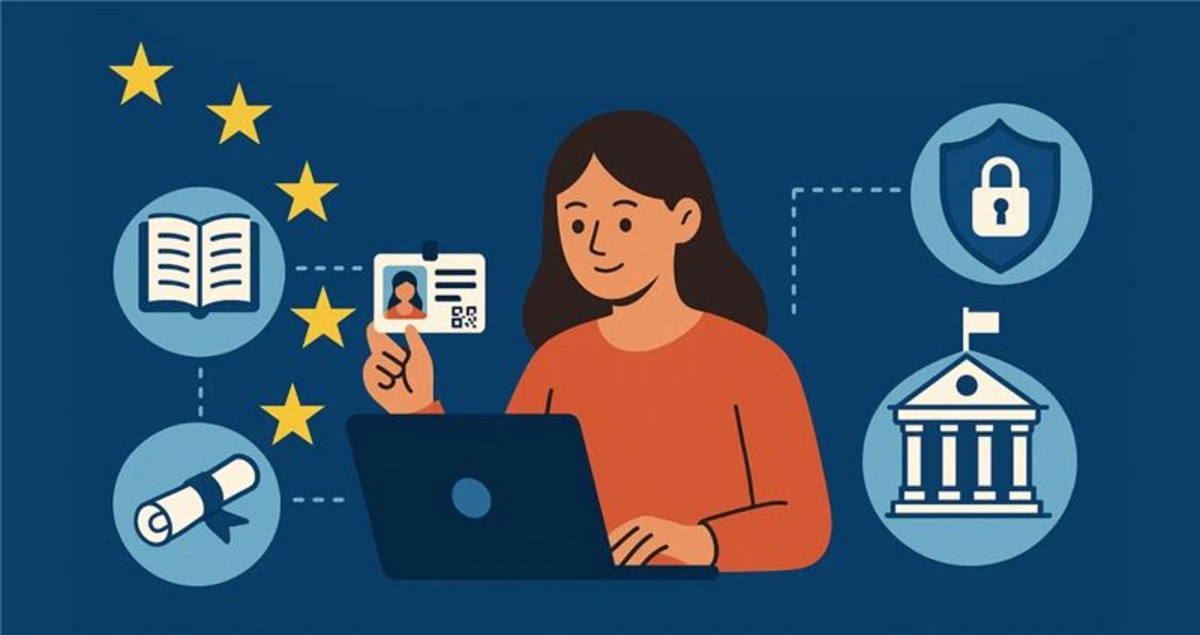
Although still at an early stage of deployment, decentralised identity offers a compelling vision for the future of digital identity. By relying on verifiable credentials and cryptographic proofs, it ensures the integrity and authenticity of exchanged attributes while minimising data exposure. Transactions become more transparent, secure, and auditable, without requiring centralised storage of sensitive information.
Decentralised identity can significantly simplify user journeys in both B2C and B2B contexts, whether online or offline. In the agricultural sector, it can facilitate consent management for data sharing, support trusted exchanges between stakeholders, and enable compliance processes related to certifications, traceability, and sector-specific data spaces. In e-commerce, decentralised identity enables frictionless access without traditional usernames and passwords, enhances consumer trust through stronger privacy guarantees, and supports secure identity verification for high-value or regulated transactions. In compliance-driven domains, it can streamline know-your-customer processes, reduce operational costs, combat identity fraud, and ensure the integrity of sensitive documents such as bank account identifiers or contractual records.
At the European level, multiple large-scale initiatives have been launched to test and validate digital identity wallets, ensure secure and interoperable deployment, and explore concrete use cases across public and private sectors. These initiatives demonstrate the growing institutional commitment to decentralised and user-centric identity models.
Recent implementations also highlight the value of hybrid approaches. The combination of state-managed centralised identity systems with decentralised digital identities managed by organisations enables more efficient data exchange, reduces redundant data entry, and supports seamless interoperability between public registries and private services. This convergence underscores the close relationship between decentralised identity and trusted data exchange infrastructures.
Digital identity as a strategic and evolving domain
Digital identity is a rapidly evolving field shaped by technological innovation, regulatory change, and growing societal expectations around privacy and security. In an increasingly interconnected world, identity systems are no longer isolated technical components but strategic enablers of digital trust, economic activity, and public service delivery. The coexistence and complementarity of centralised, federated, and decentralised approaches form the basis for building robust, secure, and user-centric digital environments capable of supporting current and future digital ecosystems.