

For centuries, identity was rooted in physical presence, personal recognition, and tangible documents. As social, economic, and institutional interactions moved online, these physical mechanisms were translated into digital systems—often without fully rethinking their implications. Understanding the transition from physical identity to digital identity is essential to grasp how trust, control, and recognition have been reshaped in the digital age
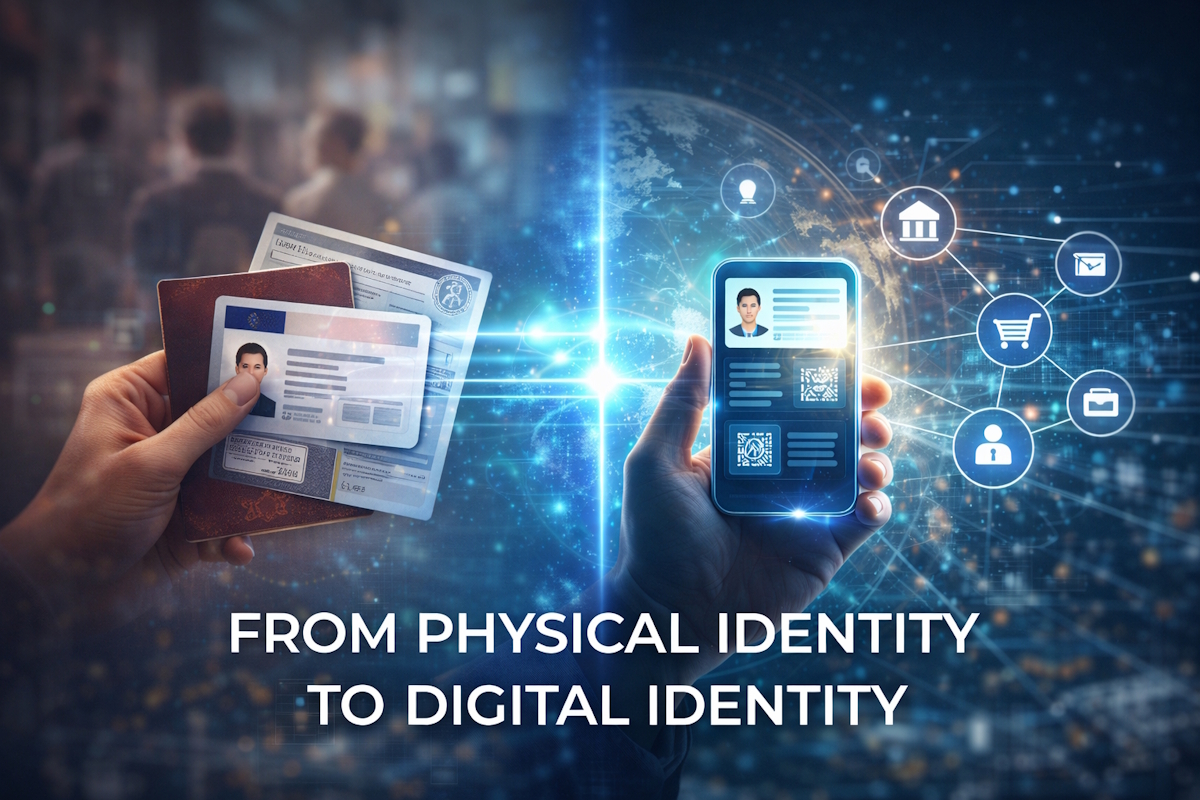
For most of human history, identity was inseparable from physical presence. To be recognized as a person, a citizen, a professional, or a member of a community required face-to-face interaction and social recognition within relatively small and stable contexts. Identity was embedded in the body, reinforced by personal relationships, and later formalized through physical documents such as birth certificates, passports, or licenses. These artifacts served as extensions of physical identity, enabling individuals to prove who they were beyond immediate personal familiarity.
As societies became more complex and geographically dispersed, physical identity systems evolved to support larger-scale coordination. Governments began issuing standardized identity documents to manage taxation, public services, mobility, and legal responsibility. These documents were still fundamentally physical: paper-based, locally stored, and verified by human inspection. Trust relied on institutional authority and visible markers such as seals, signatures, and photographs. Identity verification was slow, contextual, and largely confined to national or organizational boundaries.
The transition from physical identity to digital identity began as computers and networks became integral to economic and social life. When interactions moved online, physical presence was no longer possible, but the need for trust and recognition remained. Early digital identity systems attempted to replicate physical identity mechanisms in digital form. Usernames, passwords, and centralized databases became the dominant tools for identifying individuals in digital environments. Instead of showing a document, users typed credentials; instead of local records, institutions stored identity data in digital repositories.
This shift enabled unprecedented scale and efficiency. Millions of people could access services remotely, transact online, and communicate across borders. However, it also introduced new structural challenges. Digital identity was no longer something individuals physically possessed, but something stored and controlled by external systems. Identity became fragmented across platforms, duplicated in countless databases, and increasingly disconnected from the individual’s direct control. A person’s digital presence was no longer a single coherent identity, but a collection of accounts managed by different organizations.
A practical example illustrates this transformation. Consider opening a bank account in the past. The process required physical presence, a paper identity document, and direct verification by a bank employee. The identity interaction was local and limited in scope. Today, opening an account often happens online. The user uploads digital copies of documents, enters personal data into forms, and relies on automated systems to verify identity. While more convenient, this process results in multiple digital copies of sensitive information stored across systems the user does not control, increasing exposure to misuse or breach.
As digital identity systems matured, their limitations became more apparent. Centralized identity databases became high-value targets for cyberattacks. Stolen credentials could be reused across services, leading to identity theft and fraud. Moreover, individuals had little visibility into how their data was stored, shared, or reused. Identity shifted from being a tool of recognition to a mechanism of data extraction and surveillance, often without explicit consent or meaningful choice.
At the same time, digital identity expanded beyond individuals. Organizations, devices, and software systems also required identities to operate in digital networks. Machines needed authentication to communicate securely, applications needed authorization to access data, and automated agents required persistent identifiers. This broadened the concept of identity from a purely human attribute to a foundational element of digital infrastructure. Identity became not just about who someone is, but about what can interact, under which conditions, and with what level of trust.
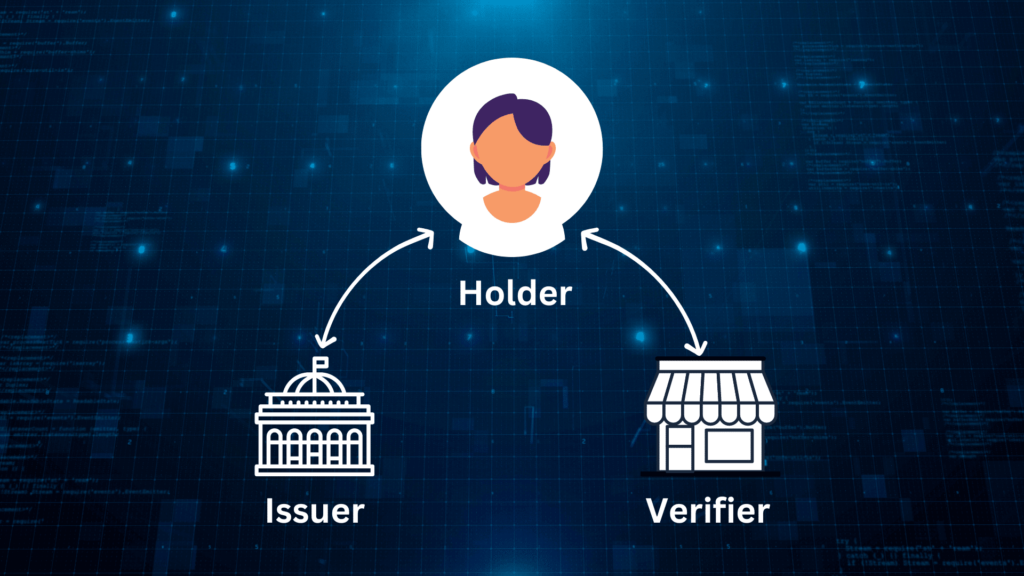
Another important change was the separation between identity and context. Physical identity is inherently contextual: a person is recognized differently in different situations, often revealing only what is relevant. Digital identity systems, however, tend to be rigid and overly revealing. Logging into a service often exposes a full account profile, even when only a single attribute is required. For example, proving eligibility for a service may require full registration, even though only one specific fact needs to be verified. This mismatch highlights a fundamental tension between physical identity practices and digital implementations.
The evolution from physical to digital identity is therefore not a simple translation, but a profound transformation. It has reshaped how trust is established, how power is distributed, and how individuals relate to institutions in digital environments. While digital identity has enabled global connectivity and efficiency, it has also exposed the inadequacy of models designed for a physical world when applied to complex digital societies.
Understanding this transition is essential for grasping why new identity models are emerging. The challenges of digital identity are not accidental; they are the result of extending physical-era assumptions into a fundamentally different environment. As digital interactions continue to replace physical ones, identity systems must evolve accordingly. The move from physical identity to digital identity is not the end of the story, but the starting point for rethinking how identity should function in a fully digital world.