

As Europe moves closer to the implementation of eIDAS 2.0, digital identity is shifting from regulatory ambition to operational reality. The European Digital Identity Wallet will redefine how citizens and organisations authenticate, share credentials and access services across borders

As Europe approaches the entry into force of the eIDAS 2.0 Regulation, the deployment of interoperable digital identity solutions is moving from policy design to concrete implementation. The regulation represents one of the most significant overhauls of digital trust and electronic identification in the European Union to date, establishing a harmonised framework in which citizens and businesses can securely identify themselves and exchange verified attributes across borders. In this context, Signaturit Group has announced the launch of its own digital identity wallet, designed to comply with the technical, security and governance requirements defined for the EUDI Wallet, ahead of its large-scale rollout scheduled for 2026.
The eIDAS 2.0 Regulation sets a clear obligation for Member States to provide at least one fully functional European Digital Identity Wallet by 24 December 2026. While the adoption of the wallet will remain voluntary for citizens, the regulatory impact on the market is substantial. Public administrations, healthcare systems, utilities, financial institutions and large online platforms will be required to recognise and accept the EUDI Wallet as a valid means of identification and authentication. This requirement introduces a high level of technical and organisational complexity, as systems must be adapted to support cross-border interoperability, strong authentication, selective disclosure of attributes and strict privacy guarantees. Many market players are still in early stages of readiness, facing challenges related to legacy infrastructures, compliance costs and architectural redesign.
Signaturit Group has positioned itself ahead of this curve by actively participating in European pilot initiatives promoted by the European Commission, including EWC, WeBuild and Trace4EU. These projects are intended to test real-world use cases of the EUDI Wallet across sectors and Member States, validating both technical standards and governance models. In parallel, Signaturit has aligned its wallet architecture with key European frameworks such as the General Data Protection Regulation and the European Blockchain Services Infrastructure, ensuring that privacy, data minimisation and trust anchors are embedded by design. Within the group, Validated ID has emerged as a particularly advanced implementation, working with universities in Catalonia to issue verifiable digital diplomas that can be stored in a wallet and presented across borders without relying on centralised verification systems.
According to Iván Basart, Director of eWallet and eSignature Spain at Signaturit Group, the European digital identity model represents a structural shift in how identity is managed in the digital space. For the first time, individuals and organisations gain direct control over their digital credentials, deciding which attributes are shared, with whom and for what purpose. This marks a departure from traditional centralised identity models, in which identity providers act as intermediaries controlling authentication flows and data exchanges. Under the new paradigm, the wallet holder becomes the sovereign point of control, while trust is established through cryptographic proofs and recognised issuers rather than through persistent central databases.
More than just a mobile app
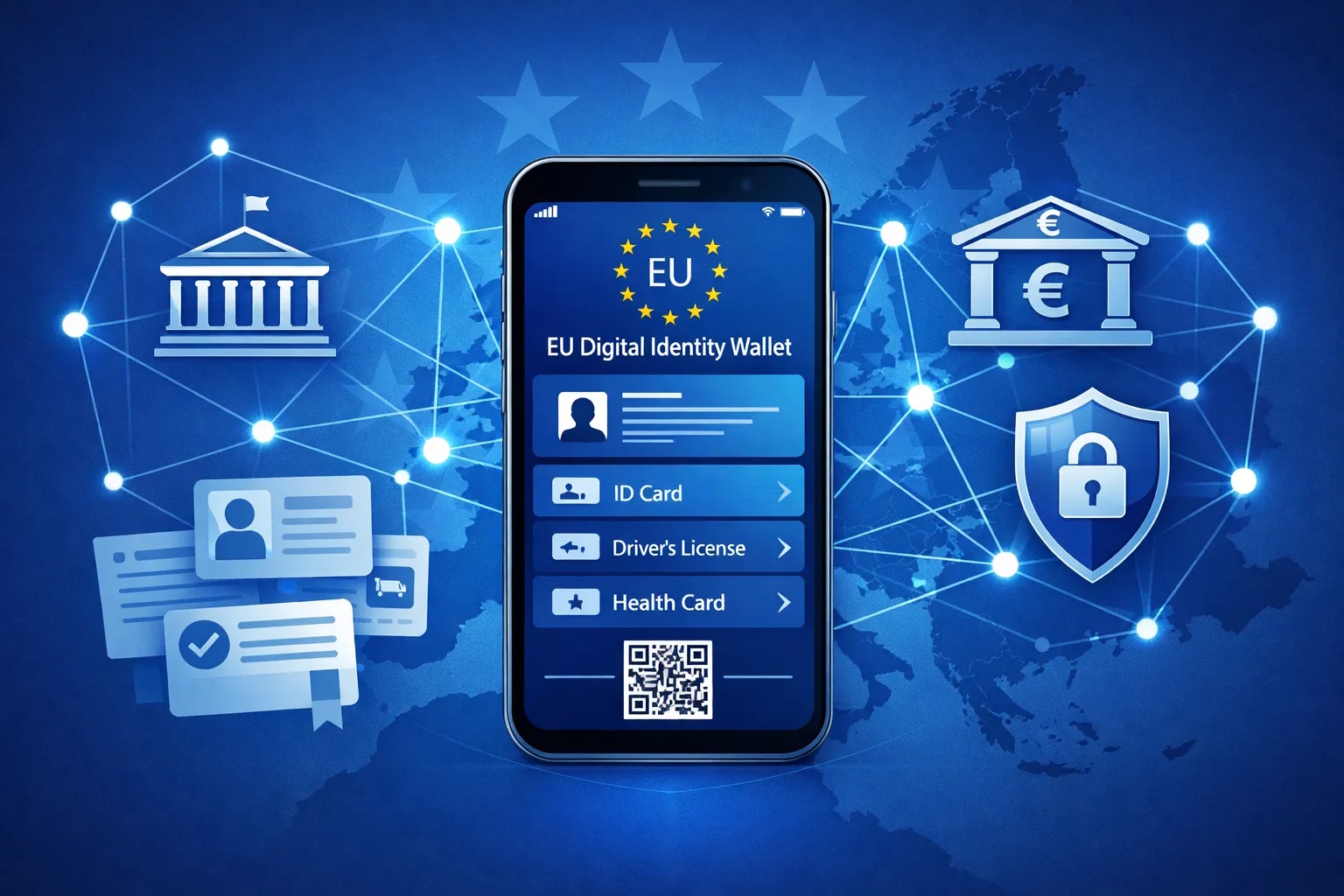
From a technical perspective, a digital identity wallet extends far beyond the concept of a mobile application. Its architecture must support the secure issuance, storage and presentation of credentials while guaranteeing integrity, authenticity and non-repudiation. Central to this model is the use of verifiable credentials, a standardised data format that enables attributes such as educational qualifications, professional licenses or driving entitlements to be cryptographically signed by trusted issuers. These credentials can then be selectively disclosed by the holder, allowing only the minimum necessary information to be shared in each interaction, which significantly enhances privacy and reduces exposure to data breaches.
Signaturit has adopted a modular and integrated approach to this architecture. Its unified digital trust platform allows the wallet to interoperate seamlessly with complementary services such as electronic signatures, qualified timestamps and identity verification mechanisms. This design facilitates adoption in highly regulated environments, where identity is tightly coupled with legal validity and auditability. In the education sector, pilots already demonstrate how students can share authenticated academic records directly with employers or foreign institutions without intermediaries or manual verification processes. In healthcare, the same principles are being explored to enable portable and secure access to medical records, subject to patient consent and strict regulatory safeguards.
Regulatory pressure is a key driver of adoption
Approved in 2024, the eIDAS 2.0 Regulation not only mandates the availability of the EUDI Wallet but also requires that it be free of charge for users and recognized across all Member States. In addition, very large online platforms will be obliged to accept the wallet as a means of authentication, which implies a profound transformation of existing login and identity management systems. Global technology companies such as Google, Amazon and Microsoft will need to adapt their services to this European framework, aligning with its privacy and interoperability requirements.
For European enterprises, this regulatory shift creates both an obligation and a strategic opportunity. Beyond compliance, the integration of wallet-based identity can streamline onboarding processes, reduce fraud, simplify authentication and automate document verification. By lowering dependence on intermediaries and manual checks, organisations can achieve measurable gains in operational efficiency while strengthening security and user trust. These benefits stem directly from the design of the European identity model, which emphasises standardisation, automation and user-centric control.
Signaturit’s investment in a digital identity wallet also reflects a broader geopolitical and industrial strategy. In a digital landscape long dominated by non-European providers, the company aims to consolidate a pan-European alternative rooted in European law, standards and values. Over recent years, Signaturit has expanded through acquisitions including Ivnosys, Universign, Vialink and Validated ID, extending its footprint to more than 40 countries and supporting close to 200 million digital transactions annually. Its infrastructure meets the stringent requirements applicable to Qualified Trust Service Providers, enabling it to operate in critical sectors with full legal certainty under EU law.
While the deployment of the EUDI Wallet will be progressive, the roadmap is now firmly established. From 2026 onwards, European citizens will be able to download a digital identity wallet and begin using it to access public and private services across the Union. Achieving seamless cross-border interoperability remains one of the main challenges, as it requires the alignment of diverse national systems, trust frameworks and administrative practices. Current pilot projects are laying the foundations for this convergence, testing not only technology but also governance, liability and operational models.